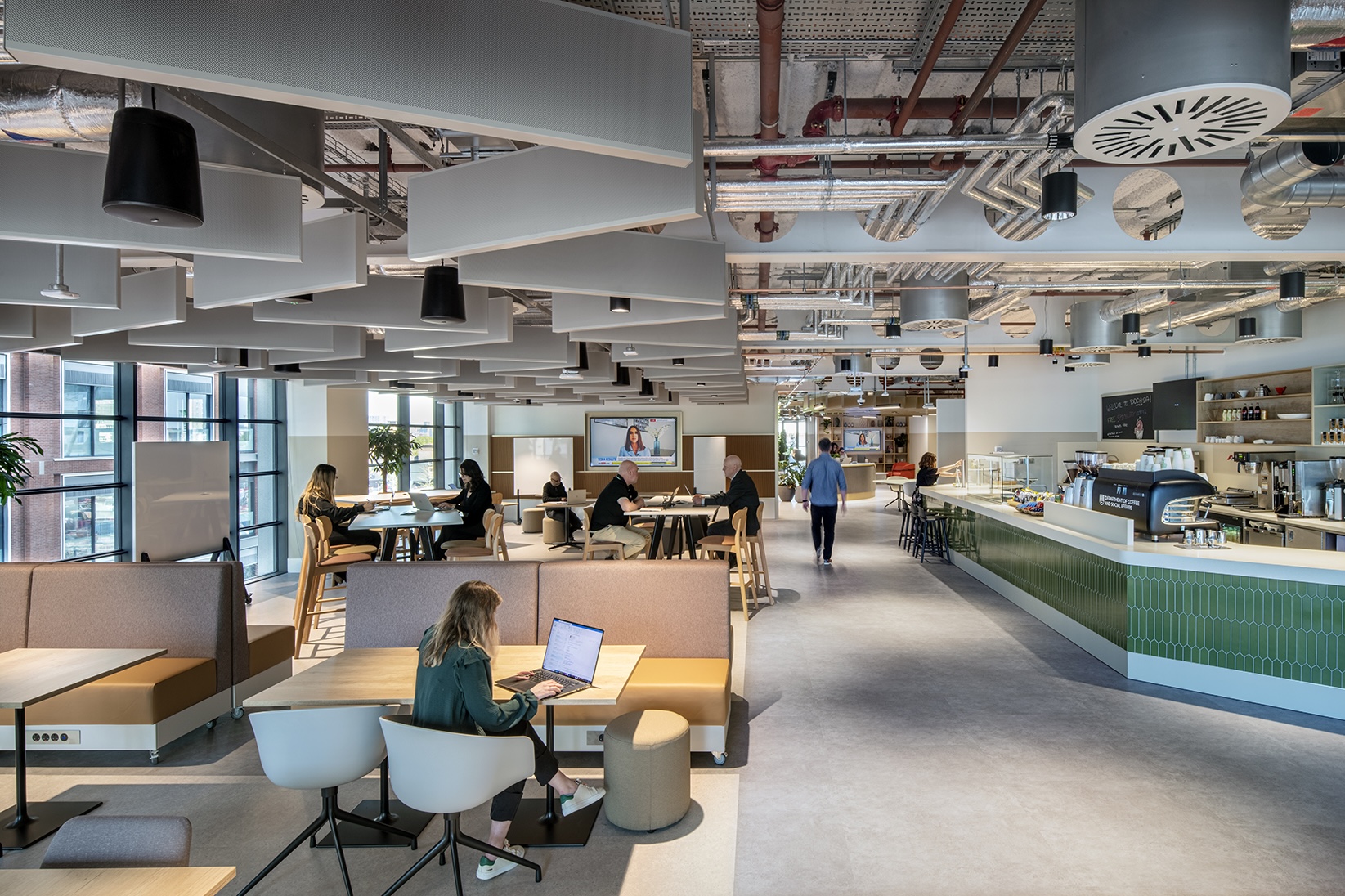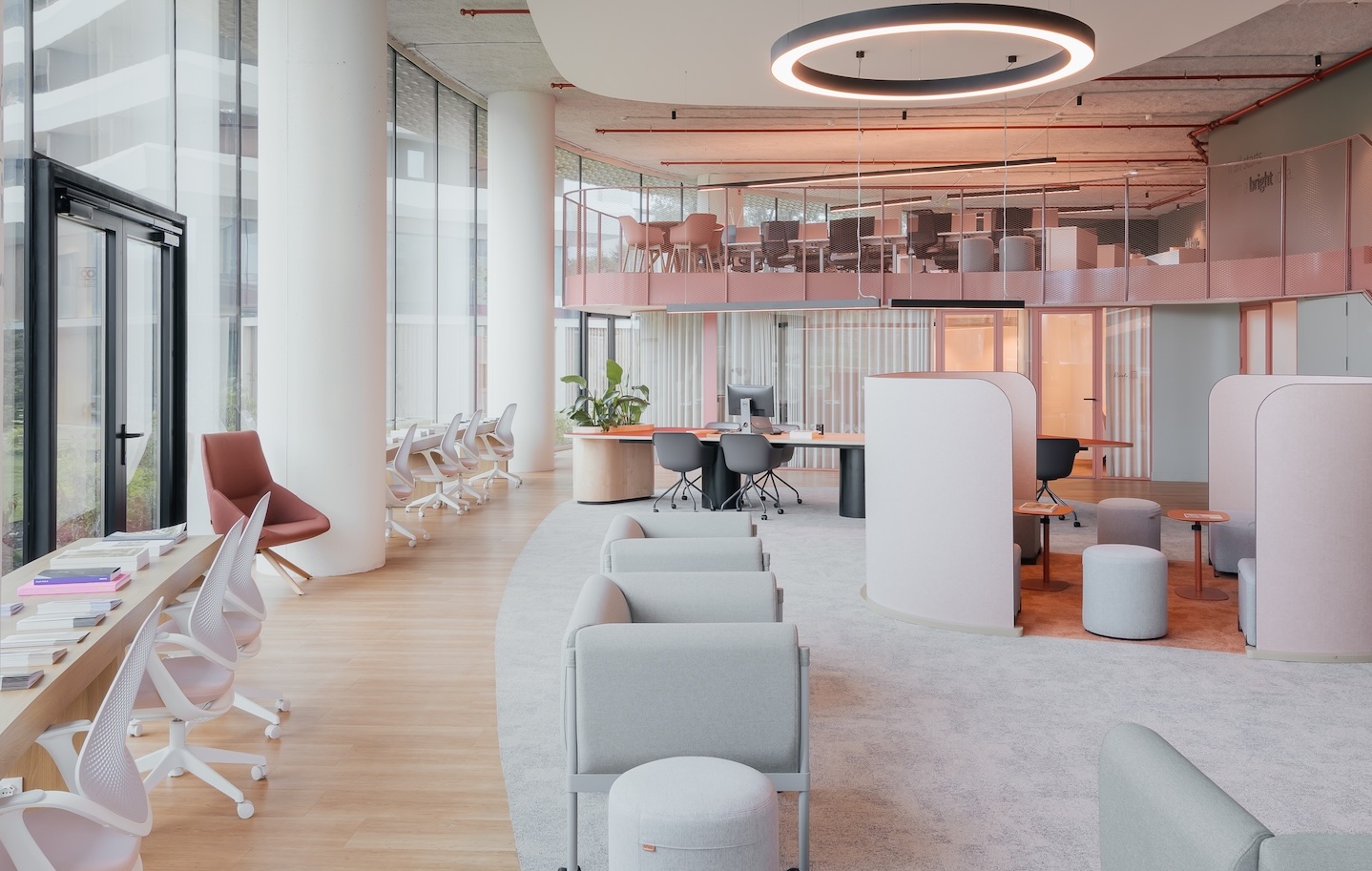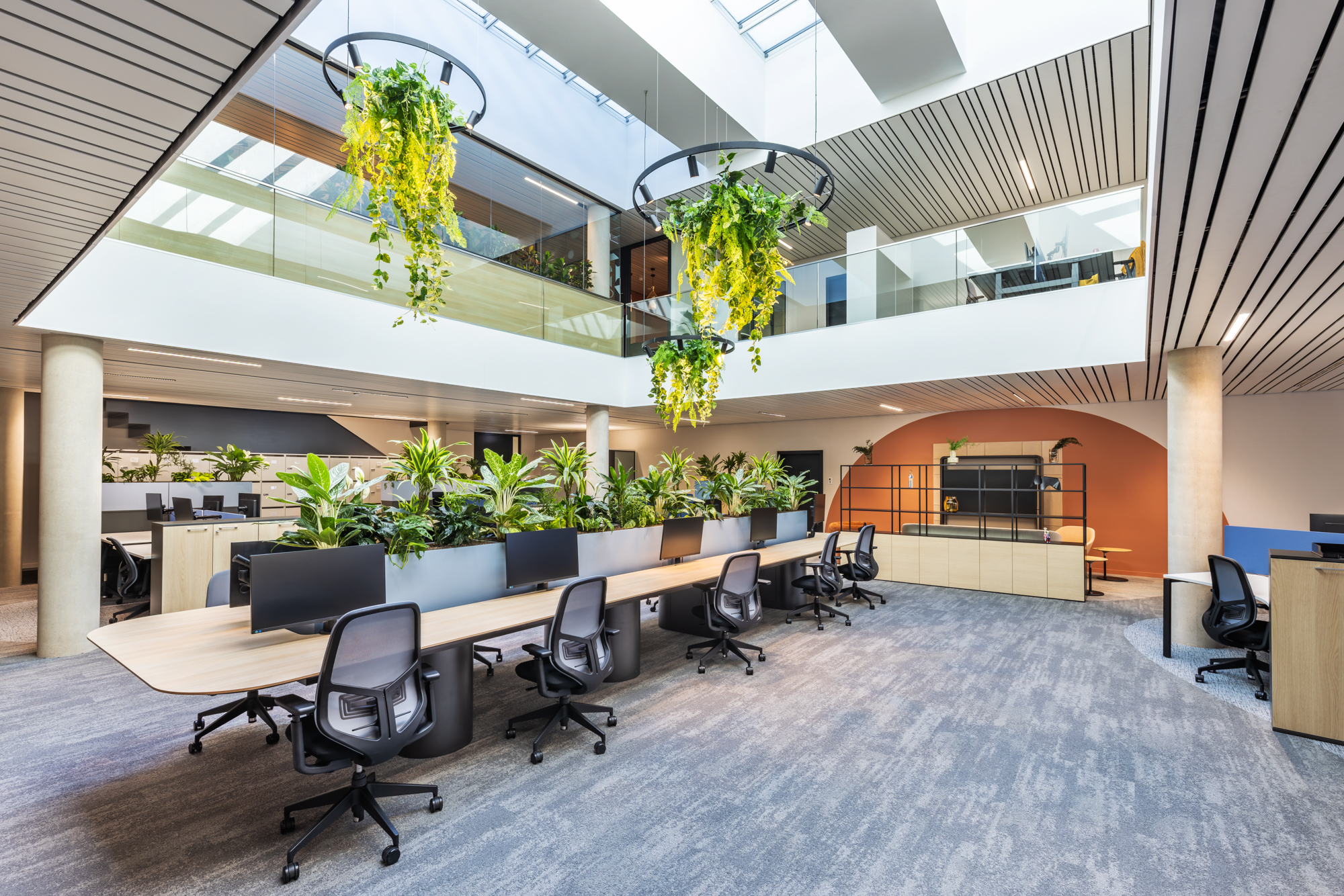
When EY Luxembourg transformed 7,000 sqm across five floors, they partnered with Tétris to prove that circular economy isn’t just environmentally responsible. It’s strategically smart for existing buildings.
The measurable result: 187 tons of CO2 emissions avoided—equivalent to what 100 trees absorb over 75 years. But the deeper story reveals why Tétris counts and measures every reuse decision, and why circular economy only delivers economic value when integrated from day one in existing building renovations.
Vincent Bertrand, Head of Operations at Tétris Luxembourg, frames the approach:
“By integrating circular economy from the design phase, every constraint becomes an opportunity. In an existing building, this methodology preserves the environment while optimizing budget and timeline.”
Why Tétris pioneered circular economy in office fit-out
Tétris was the initiator of circular economy methodology in the workplace design sector, not as a sustainability add-on, but as a fundamental design and construction strategy. While others discussed theoretical environmental benefits, Tétris developed the audit protocols, testing standards, and measurement frameworks that make reuse financially viable.
The differentiator? We count and measure everything. Every partition panel tested and retained. Every meter of data cabling validated. Every kilogram of CO2 avoided. This rigor transforms circular economy from aspiration to accountable project delivery.
The EY Luxembourg project demonstrates this maturity at scale. With a Big Four accounting firm as client and 7,000 sqm of workspace scope, the project proves circular methodology works for corporate headquarters and not just boutique pilot projects.
The EY Luxembourg project: Scale meets sustainability
EY Luxembourg’s workspace spans five floors requiring comprehensive renovation of an existing building. Rather than following the conventional demolish-and-replace approach, Tétris conducted exhaustive existing conditions audits before design development began.
“We audited the existing conditions to maximize reuse potential,”
explains Vincent Bertrand.
This proactive assessment identified reuse opportunities across architectural systems, building infrastructure, and interior finishes.
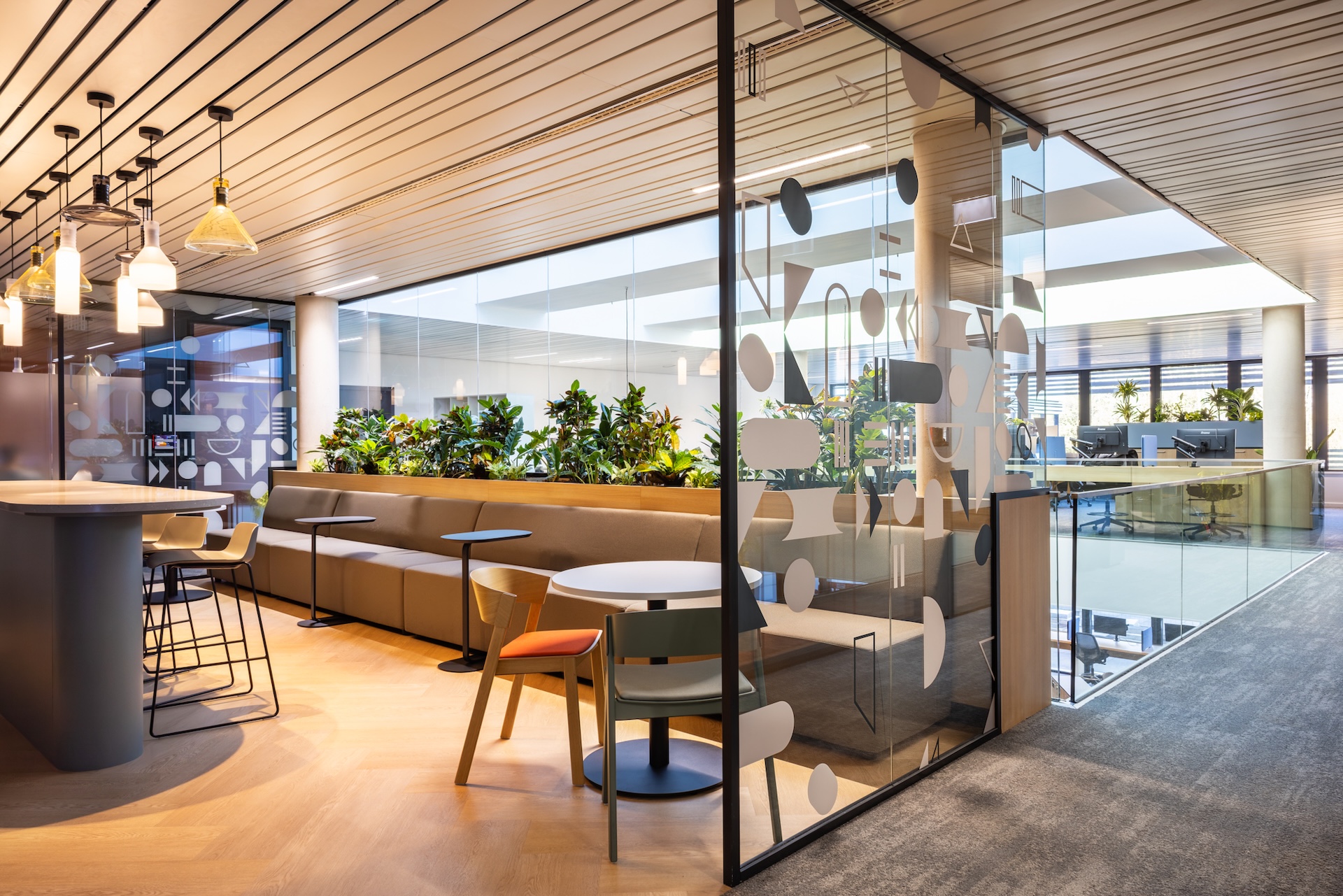
The design concept, led by Tétris designer Estelle Druet, drew inspiration from Luxembourg’s five provinces and creating distinct zones that celebrate regional identity. Critically, the design integrated reused materials as featured elements rather than hidden compromises.
Key project metrics:
- Total area: 7,000 sqm
- Number of floors: 5
- CO2 avoided: 187 tons
- Carpet reused: 2,300 sqm
- Client: EY Luxembourg
Measuring what matters: 12 reuse applications
Tétris documented and quantified 12 distinct reuse categories across the EY project. This measurement discipline separates genuine circular economy from greenwashing:
Building Systems:
- Data cabling: Complete existing infrastructure tested and retained, eliminating thousands of meters of new cable installation
- HVAC units: Dormant air conditioning equipment stored in building recommissioned for server room cooling
- IT equipment racks: Server room racks evaluated and retained
Architectural Elements:
- Partition panels: Former panels repurposed as TV mounting reinforcement in new configurations
- Fire-rated doors: 5 existing fire doors redeployed to technical rooms
- Mobile partition wall: Relocated from Level 3 to Building B1 meeting room
- Glass doors: 4 glazed doors allocated to future Tétris project
- Wall insulation : Temporarily removed and reinstalled in same locations
Flooring and Finishes:
- Carpet tiles: 2,300 sqm retained and integrated into Mullerthal zone design concept
- Parquet flooring: 80-100 sqm removed for allocation to another project
- Acoustic panels: Textile waste-based panels installed
- Ceiling tiles : Removed and stored for EY’s future project phases
Additionally, EY reintegrated furniture from previous offices, demonstrating client-led circularity that Tétris facilitated through compatible space planning.
The circular economy business case: When does it deliver value?
Transparency matters: circular economy in office fit-out is a calculated approach. The economic payoff depends entirely on two conditions:
1. Integration from project start
Reuse requires upfront audit investment and design flexibility to incorporate found materials. When circular thinking begins after design finalization, it adds cost rather than reducing it.
2. Existing building context
New construction offers fewer reuse opportunities. Circular economy delivers financial value specifically in existing building renovations where asset inventories already exist. The 7,000 sqm EY project exemplifies this: five floors of existing systems provided the material bank.
Vincent Bertrand acknowledges this reality: “In an existing building, this approach optimizes budget and timeline.”
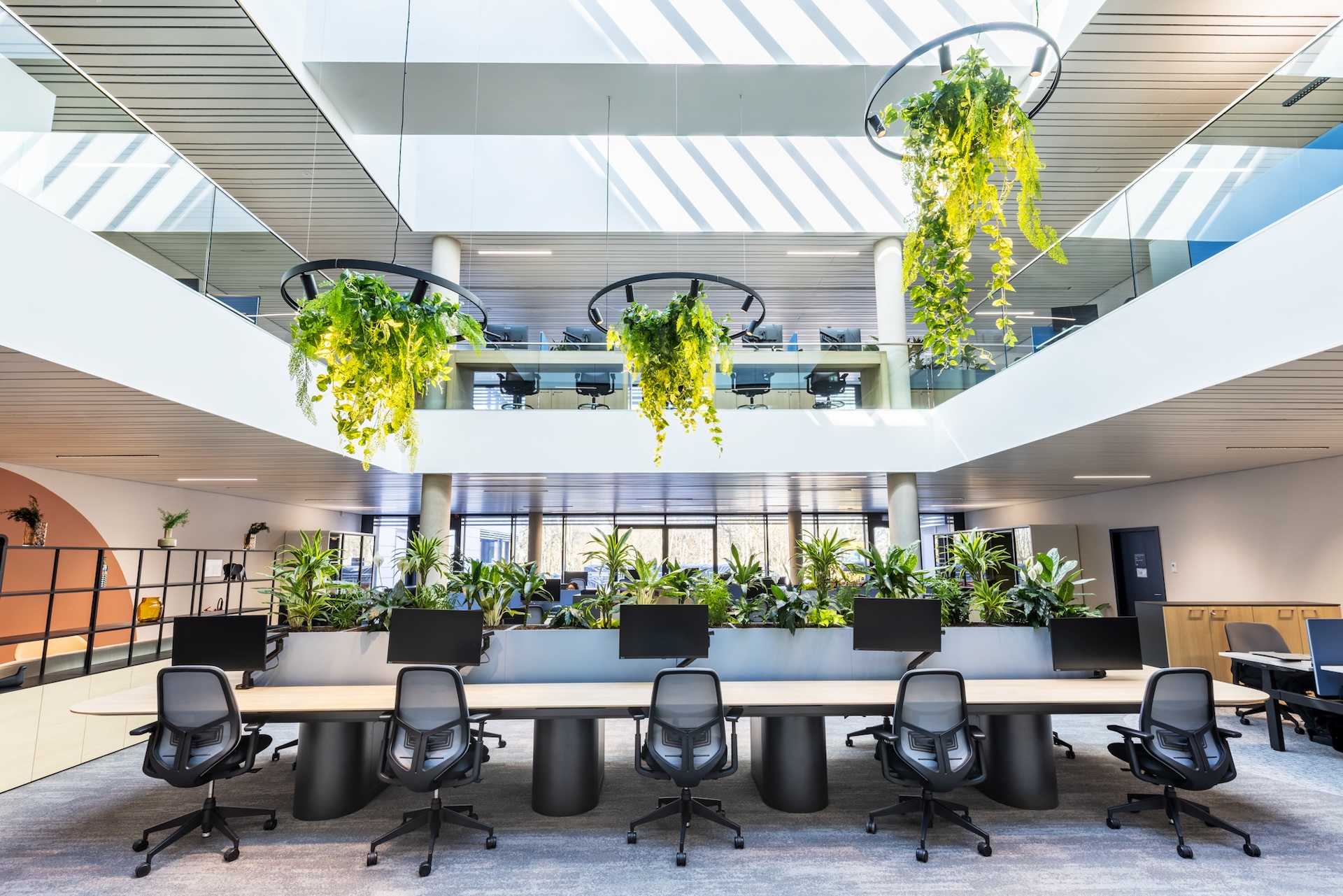
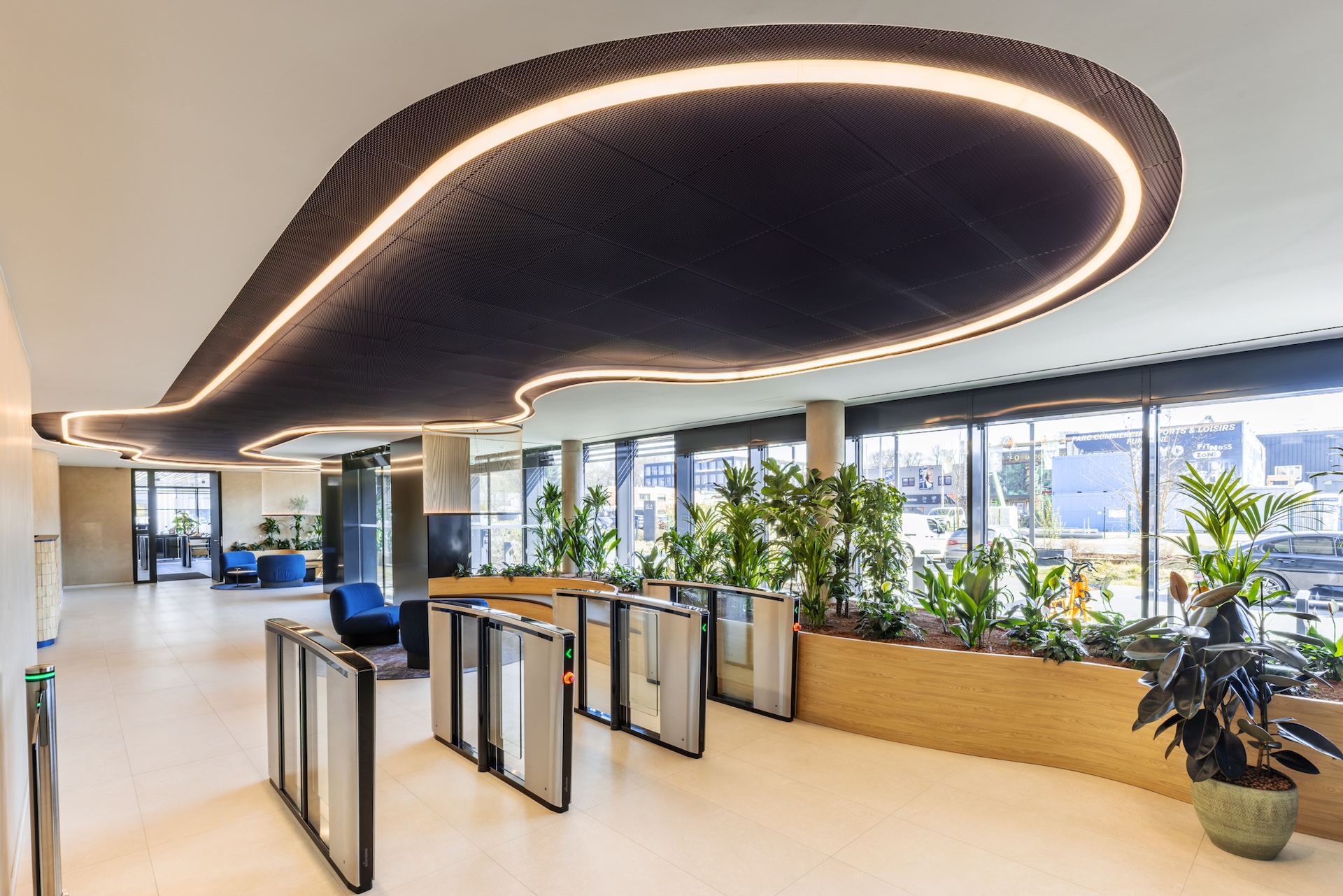
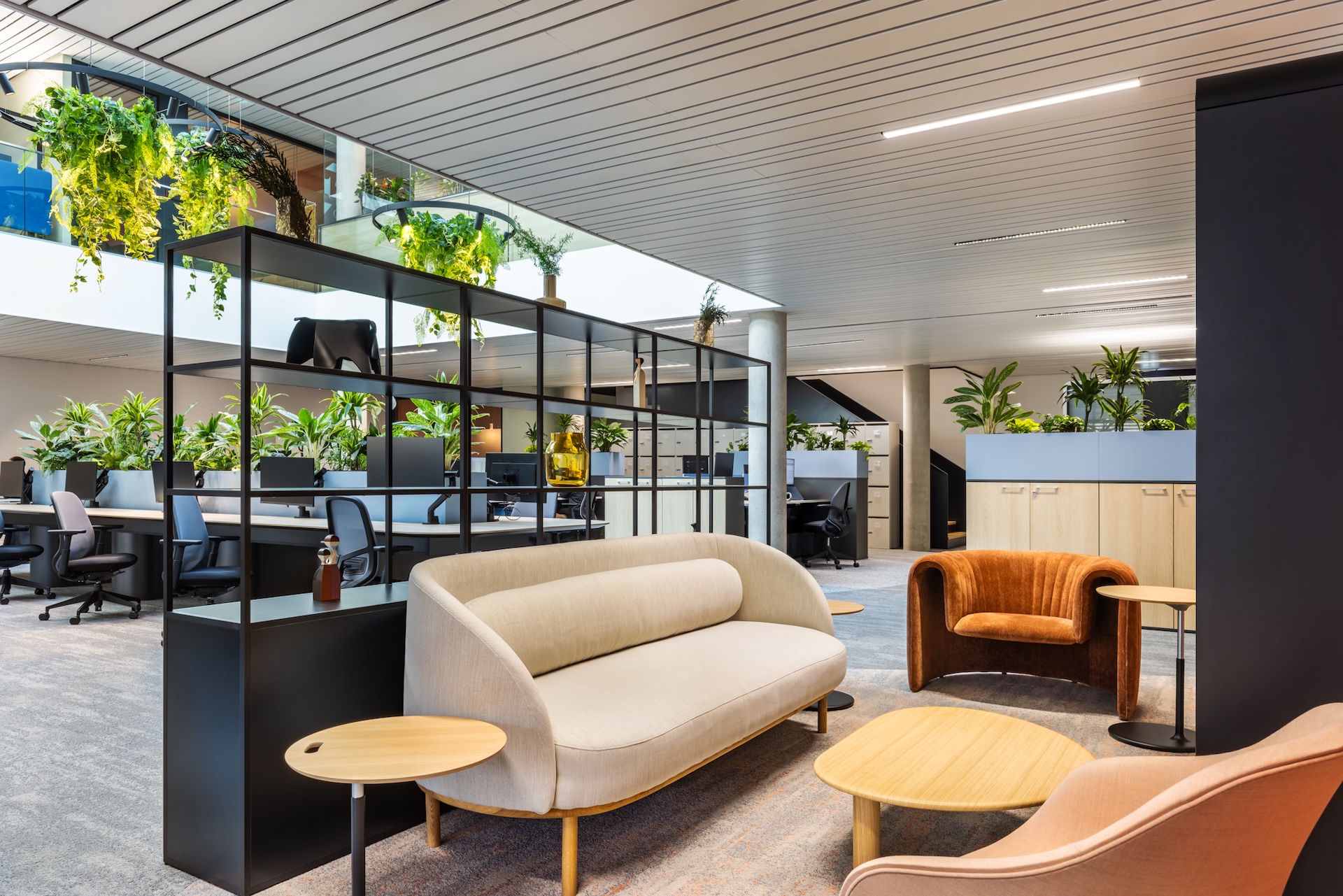
Budget benefits come from avoided procurement, reduced waste disposal costs, and compressed schedules (no manufacturing/shipping lead times). These savings can be redirected to employee experience enhancements. For EY, reuse enabled investment in biophilic design elements that wouldn’t have fit original budgets.
The CO2 avoidance is quantifiable—187 tons for this project—but financial savings are project-specific and cannot be generalized.
Why this matters beyond environmental metrics
Circular economy office design delivers value far beyond CO2 calculations—it directly impacts your corporate brand and talent retention in today’s competitive market.
Brand differentiation in action
When companies showcase their workspace transformation, they’re not just discussing square meters and sustainability reports. They’re demonstrating tangible innovation to clients, partners, and prospects who visit their offices. The measurable 187 tons of CO2 avoided becomes a conversation starter , supporting EY’s broader direction on sustainability strategy
Talent retention through workspace values
Today’s workforce—particularly in Luxembourg and Belgium’s highly competitive talent markets—evaluates employers through their environmental actions, not just policies.
For EY, the goal is clear: to make the workplace environment, combining sustainability and pleasant, thoughtful design, a key lever for employees’ wellbeing.
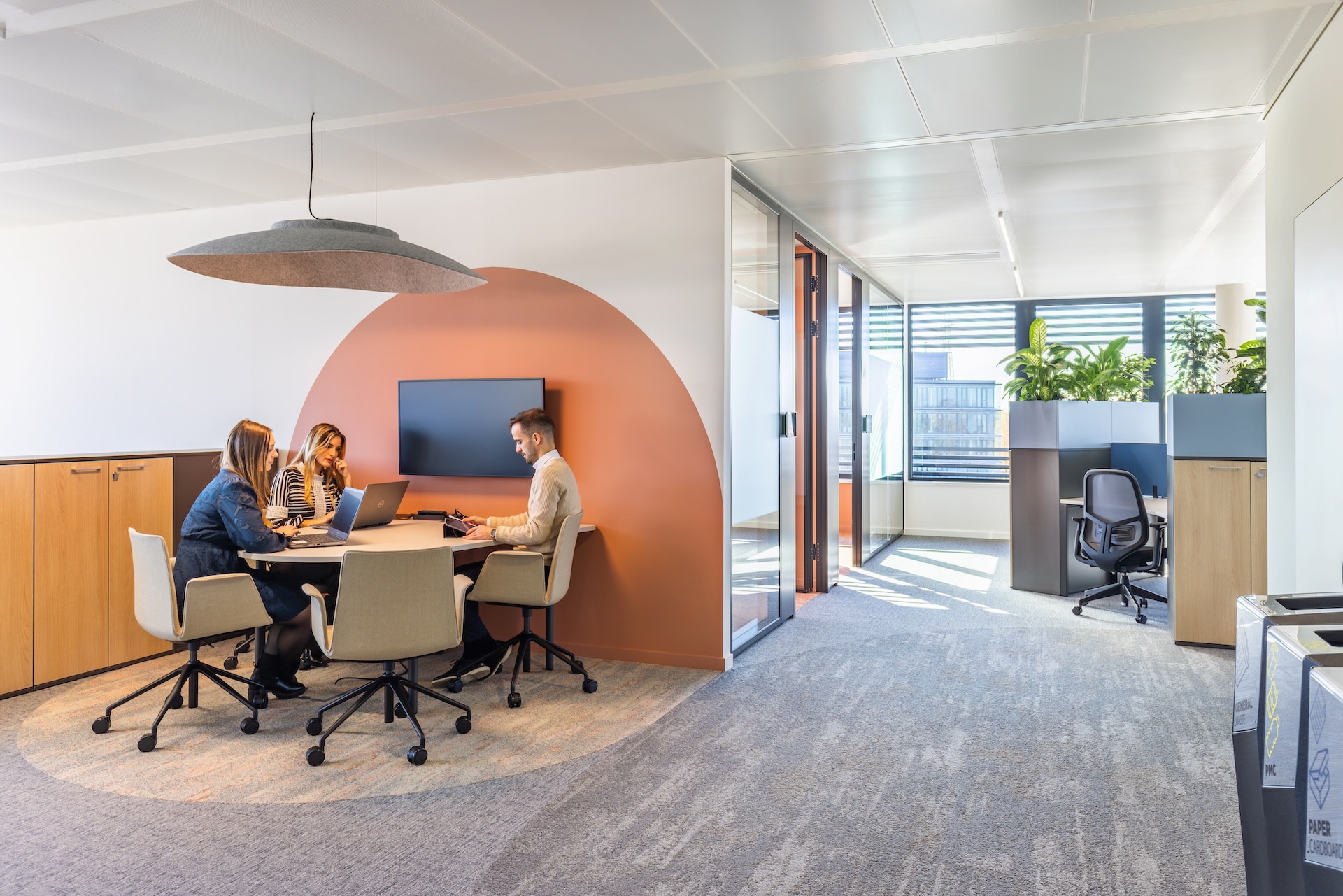
The carpet on the floor reflects material reuse rather than waste, with design choices that also consider environmental impact.
This isn’t abstract corporate social responsibility, it’s the physical environment where employees spend 40+ hours weekly, reinforcing , reinforcing a work environment that reflects the organisation’s broader commitments.
The EY project demonstrates this duality: visitors see compelling design inspired by Luxembourg’s five provinces, while employees know the story behind the 2,300sqm of transformed carpet and the textile-waste acoustic panels. Both audiences receive the message: this organization thinks differently and acts on its commitments.
From constraint to opportunity: The design advantage
Estelle Druet’s design for the Mullerthal zone demonstrates circular economy’s creative potential. Rather than hiding the 2,300 sqm of reused carpet, the design team made it the hero;
“Instead of throwing it away, we reintegrated it into our concept from the beginning in the Mullerthal zone, inspired by the river. The result: carpet transformed into a unique pattern evoking the region’s waterways,”
Estelle Druet explains.
The outcome delivers what the designer calls “invisible reuse”: “The end user enjoys an exceptional experience without seeing the difference.” Visitors experience cohesive Luxembourg-inspired design—unaware they’re walking on retained materials that avoided landfill and carbon emissions.
This design-led approach proves circular economy enhances rather than constrains creativity. The acoustic panels fabricated from compacted textile waste appear indistinguishable from virgin alternatives. Quality and aesthetics remain uncompromised.
For corporate decision-makers, this matters: circular economy doesn’t require employees to accept inferior workspaces. The EY Luxembourg office demonstrates that sustainability and design excellence coexist when expertise guides the process.
Start your circular economy project with Tétris
Whether you’re planning workspace renovation in Luxembourg, Belgium, or across Europe, Tétris brings the circular economy expertise that transforms existing buildings into sustainable, high-performance environments.
Our approach begins with rigorous existing conditions assessment—identifying reuse opportunities before design development. We measure and document every retained element, providing transparent CO2 avoidance data for your sustainability reporting.
Ready to explore circular economy potential in your next project?
Contact Tétris Design & Build to schedule a feasibility assessment for your existing building.
Explore Tétris services:
- Workplace Design: Employee-centric space planning with circular principles
- Office Fit-Out: End-to-end project delivery for existing building transformations
- Project Management: Turnkey coordination from audit through occupancy
Transform your existing workspace. Measure your impact. Deliver exceptional design.