The office fit-out in Europe, the Middle East, and Africa (EMEA) is navigating a complex landscape of elevated costs, geopolitical uncertainty, and evolving workplace demands. As organisations balance return-to-office strategies with sustainability commitments and technology integration, understanding cost dynamics has never been more critical.
Drawing on extensive insights from corporate real estate decision-makers and data from 25 countries, JLL identifies key cost trends that will shape the future of office fit-out costs across EMEA. Despite ongoing market pressures, forward-thinking organisations are leveraging strategic design and procurement approaches to create spaces that not only meet functional needs but also enhance employee experience, drive sustainability, and manage long-term operational costs.
1. Managing cost escalation in an uncertain environment
The EMEA construction market entered 2026 in a condition of cautious stability, with the average cost of a medium-quality corporate office reaching €1,960/sqm. This regional benchmark, however, encompasses wide-ranging variations across markets and work packages, with year-on-year cost increases spanning 5% to 7%.
“Fit-out costs across EMEA continued to rise in the past 12 months, but the picture varies significantly by market,” says Gary Tracey, Head of Cost Management, PDS EMEA at JLL. “Whilst broader inflation stabilisation and competitive tendering tempered escalations in parts of Europe, other markets continued to see above-average increases driven by elevated labour costs, energy prices, and import dependency.”
The ongoing geopolitical tensions in the Middle East present a material risk to fit-out budgets not fully reflected in most CAPEX plans for 2026. Disruptions to energy markets and supply chains are causing volatility across energy, metals, petrochemicals, and plastics markets, with ripple effects on material availability and cost predictability worldwide.
2. Technology and M&E costs outpacing overall fit-out inflation
Mechanical & Electrical (M&E) services and Security, IT & AV works have emerged as the fastest-growing cost categories in EMEA fit-out projects, now representing over 40% of total fit-out spend on average. These technical work packages are experiencing the most persistent cost increases of any fit-out category, driven by material cost volatility, supply chain complexity, and shortages of skilled specialist trades.
Copper remains one of the most significant influencing factors of cost both M&E services and Technology specifications, with prices hitting record levels and a structural supply deficit projected through 2026 and beyond. Simultaneously, ongoing semiconductor shortages continue to constrain the pricing and availability of smart building controls, BMS equipment, AV systems, security cameras, and access control infrastructure.
“Despite ongoing cost pressures for real estate, technology investments aimed at improving energy and operational efficiency are taking priority in capital planning, “ says Ruth Hynes, Senior Director and Global PDS Research Lead at JLL. “The rapid expansion of AI infrastructure is reshaping the cost environment for components that define a modern office fit-out, yet these remain critical to creating high-performance environments employers are seeking. This makes early planning and procurement more important than ever.
Lead times for major M&E items now exceed 40 weeks across a number of EMEA markets, introducing both cost and schedule risk. For occupiers, the practical implication is clear: technical specifications must be finalised and procurement initiated significantly earlier in the project lifecycle than traditional timelines have historically demanded.
3. The office fit-out as an energy strategy
Rising energy costs, stricter regulations, and net-zero commitments are making energy performance a central consideration in every fit-out decision. Across EMEA, occupiers are investing in high-performance MEP systems, low-carbon materials, and smart building controls—not just for sustainability, but to manage operational costs and regulatory compliance.
According to JLL’s corporate occupier survey, energy performance is the leading sustainability driver for CRE strategies, cited by 65% of respondents. Net zero alignment is a priority for 42% of occupiers, which is driving fit-out specifications to include embodied carbon assessments, low-carbon materials, and circular economy principles.
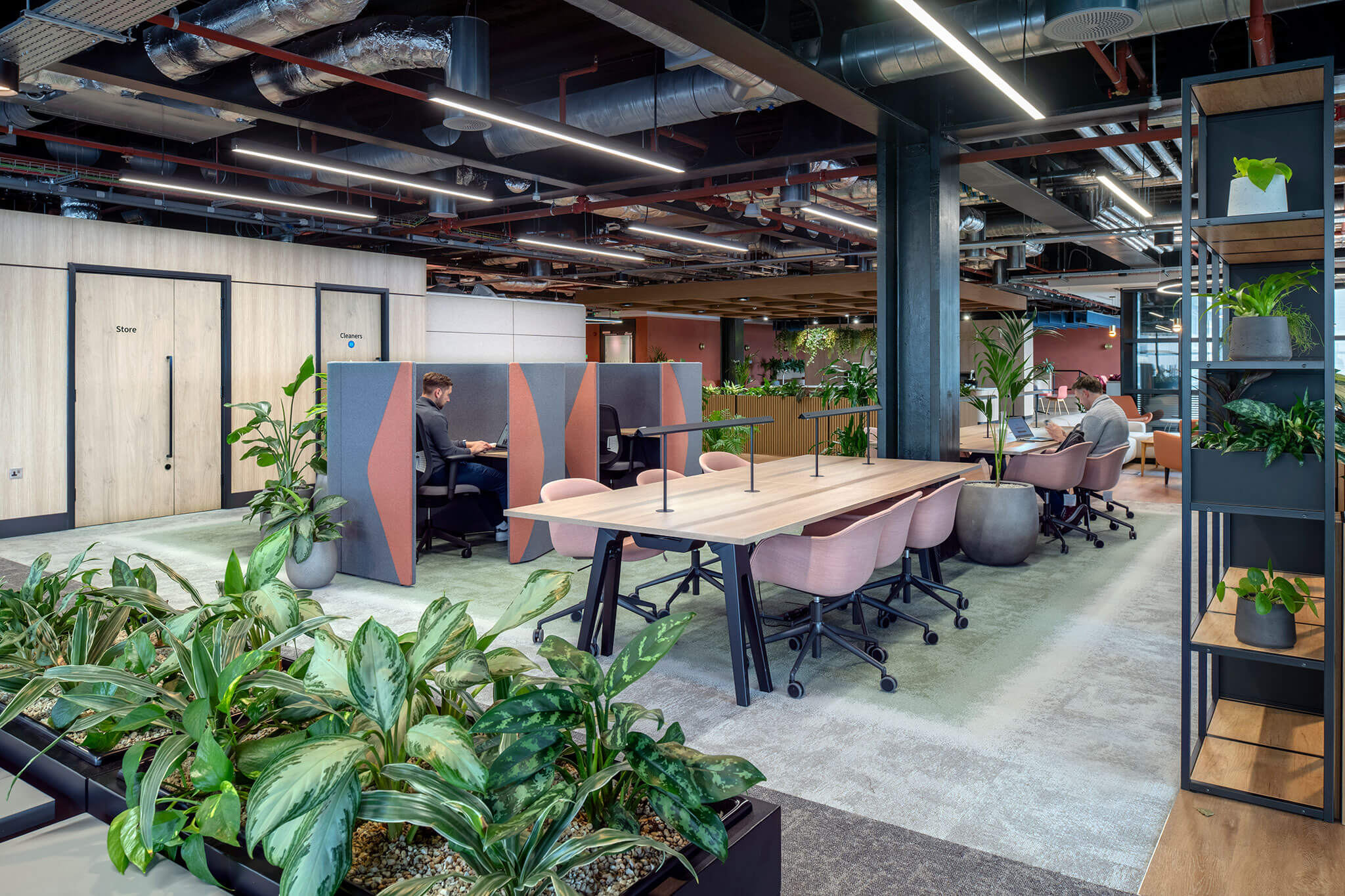
Common sustainable design priorities now include upgrading MEP systems to meet building certifications, reusing and upcycling existing furniture, and sourcing materials locally to reduce carbon emissions. More organisations are also designing for disassembly and using material passports to support circularity.
With ongoing geopolitical tensions disrupting energy markets, managing energy and operational costs through integrated capital and operational budgets is increasingly important. Forward-thinking organisations recognise that upfront investment in high-performance systems delivers significant cost savings throughout the life of the fit-out.
4. Typology-driven cost planning and early engagement
Choosing the right office layout early in the planning process is essential for managing costs effectively. In EMEA, fit-out costs can vary by up to 12% depending on the layout style, or up to 35% when finishes are included. Open and agile spaces work well for collaborative teams, whilst structured layouts with private areas better suit roles requiring focus and confidentiality.
Without understanding these differences, organisations risk spending too much or too little for their needs. The choice between an open layout (€1,700–€2,080/sqm), mixed-use design (€1,820–€2,240/sqm), or structured offices (€1,890–€2,340/sqm) should be based on how people work, not just on cost.
Looking ahead
As the office fit-out industry navigates these trends, organisations should adopt a more strategic and integrated approach to CAPEX planning. This means reviewing cost assumptions against geopolitical risk, assessing local supply chains and labour markets early, and factoring AI-driven demand into workplace design and M&E budgets.
The future of office fit-outs in EMEA is evolving towards creating spaces that balance cost-effectiveness with employee experience, sustainability performance, and operational efficiency. Organisations that understand these cost dynamics and plan accordingly will be better positioned to create environments that attract talent, enhance productivity, and contribute positively to their bottom line.